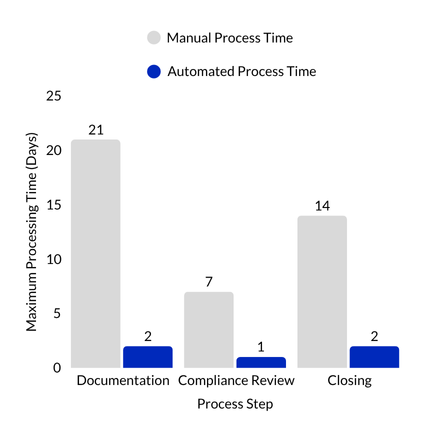





In today’s commercial lending environment, even thoroughly researched, well-structured loans can experience challenges. When that happens, lenders do not have to react without protections or alternatives. While lenders cannot control interest rates, inflation, or broader market volatility, they can control the tools they have available and the options they can create to respond to their distressed loans.
The most successful lenders know that timing, options and flexibility make the greatest differences when crafting a successful workout. They have learned to rely on a range of proven workout tools to preserve value and mitigate risk. Among the most widely used tools include loan modifications, forbearance agreements, and deeds in lieu of foreclosure.
Distressed loans can be managed in multiple ways. Here are three approaches lenders frequently rely on:
The Three Core Workout Tools
| Tool | Best For | Why It Matters |
|---|---|---|
|
Forbearance |
Trusted borrowers with limited personal assets and/or weak collateral assets making it unlikely for the borrower can improve its ability to repay the underlying loan in full. |
Offers active lender management and flexibility when a loan is already in default, giving both sides time to work towards a mutually agreeable solution while preserving the lender’s ability to speedily exercise its remedies against the collateral property and/or the guarantor parties. |
|
Loan Modification |
Borrowers who have the capacity to restructure the debt by reinvesting in the security property, thereby improving its ability to repay the underlying loan in full. |
Creates a path to resolution without enforcement while maintaining collateral protection and improving repayment capabilities. |
|
Deed in Lieu of Foreclosure |
Borrowers who are unable to support the collateral property and/or other collateral assets and are willing to expedite the lender’s recovery against the collateral assets. |
Provides a faster, cooperative exit to avoid prolonged foreclosure proceedings. |
What is a Loan Modification?
A loan modification is a formal agreement between a lender and a borrower to change one or more terms of an existing underperforming or non-performing loan, usually to avoid a potential or current default and restore the loan to performing status. In every potential modification situation, a lender will require the borrower and any guarantor to provide updated financial information on the collateral property and the loan parties’ financial condition to determine if a loan workout would be possible under terms acceptable to the lender.
In this scenario, lenders may agree to some adjustment to the loan repayment terms (e.g., change in the interest rate, acceptance of interest-only payments for a fixed period, etc.) in return for the borrower and/or guarantor reducing the lender’s risk of nonpayment of the loan (e.g., making a one-time principal reduction payment, investing additional capital to improve the collateral assets, adding an additional guarantor, etc.).
The goal of the parties often is to free up some property cash flow so the borrower can reinvest in the property — perhaps through capital improvements, increased marketing, constructing tenant improvements — all to stabilize operations and/or enhance the asset’s marketability, which will improve the loan parties’ ability to repay the secured loan in full. When such a plan is executed effectively, this kind of workout benefits both sides: the lender avoids default-related losses, and the borrower has a viable path back to long-term success.
Common Examples:
- Extending the maturity date
- Adjusting the interest rate and/or other repayment terms
- Contributing new collateral
- Making a principal reduction payment
Key Distinctions:
- If the borrower has already defaulted and seems unlikely to have the capacity to perform under any reasonable workout plan, you’re most likely headed into forbearance territory.
- If the borrower hasn’t defaulted yet or has just gone into default but is actively working with the lender on a solution, you’re in modification territory.
- Loan modifications can extend the life of the loan, but they don’t usually include a deed in lieu as part of the workout terms.
What is a Forbearance?
Forbearance agreements, although fundamentally different from a collaborative loan modification, contain some overlapping terms. As with a loan modification, with respect to any potential forbearance, a lender will require the borrower and any guarantor to provide updated financial information on the collateral property and the loan parties’ financial condition to determine what terms, if any, could provide a potential opportunity for the loan parties to get the loan out of default and return it to performing status.
A forbearance agreement signals that while a lender still believes in the borrower’s integrity and intentions, that lender has little faith in the collateral asset’s performance based on the market’s ability to support a turnaround. Moreover, the lender acknowledges that the loan parties lack other resources to shore up the collateral or take other actions to improve their ability to repay the loan.
Often, these situations involve properties that are underwater or significantly overleveraged due to significant changes in the economy, and any successful recovery will require a favorable, but highly unlikely, shift in market conditions. In essence, the lender is gambling that external forces might improve the situation, so they need to enter into an agreement with the loan parties that provides more protections for the lender to speedily exercise its remedies if the borrower’s and/or the collateral’s economic condition does not improve within a fixed time frame.
Common Examples:
- An agreement by a lender and a borrower for (a) a short-term loan modification designed to provide the borrower with some temporary relief to create an opportunity for a future loan workout, but (b) preserves the current loan default so that the lender can immediately commence exercising its rights and remedies under the loan documents and the loan without delay or interference from the loan parties.
- Under this approach, a lender often can obtain greater rights to expedite the full exercise of its rights and remedies while offering the loan parties a final chance to salvage their interests in the collateral assets.
Key Distinctions:
- Forbearance agreements typically begin after the loan already is in default.
- If the workout terms set forth in the agreement fall short, whether due to the borrower’s failure or the continuation of unfavorable market forces, the lender is contractually empowered to move immediately to enforcement actions without delay or interference from the borrower and/or any guarantor.
- Forbearance agreements can impose immense pressure on a borrower. Time for turning around a default situation will be limited, and the standard borrower protections such as notice periods and cure rights will have either expired or been waived. In other words, a forbearance is a borrower’s very last-chance to pursue a lender’s willingness to offer the borrower a final opportunity to salvage a difficult situation, while the lender retains control over the collateral and imposes by agreement limits on the borrower’s ability to rapidly at when the plan fails.
What is a Deed in Lieu?
A deed in lieu of foreclosure is a voluntary agreement where a borrower transfers ownership of the property to the lender to satisfy a defaulted loan by consenting to transfer title to the collateral property to its lender to avoid undergoing the formal foreclosure proceeding.
In some cases, lenders insist on foreclosure, most commonly to obtain “clean title” to the collateral property, but also for other legal reasons depending on the condition of the collateral property or the loan parties. Again, just as with a loan modification or a forbearance, a lender will require the borrower and any guarantor to provide updated financial information on the collateral property and the loan parties’ financial condition to determine whether the parties’ have any capacity to work out the loan.
A deed-in-lieu-of-foreclosure agreement provides that the borrower will voluntarily transfer title to the collateral property in satisfaction of the loan in order to avoid a pending judicial or non-judicial foreclosure. These agreements may preserve the lender’s right to pursue recovery for any loan deficiency against a guarantor. However, often if the borrower and guarantor(s) are willing to immediately transfer the property, waive all rights to dispute the loan, release all potential claims against the lender, and cooperate fully with the closing of the transfer of title to the lender, then this demonstration of the borrower’s and guarantor’s cooperation to expedite the lender’s recovery, unlike foreclosure, which often reflects adversarial relations.
When to Use:
- The borrower and guarantor(s) are no longer able to support the asset or otherwise repay the loan
- There’s minimal equity left in the collateral assets
- Both parties want a speedy resolution to a hopeless situation
Key Considerations:
- Confirm clear title (no hidden liens or environmental surprises)
- Ensure mutual release of liability is documented
- May still require cooperation to transfer property smoothly
Which workout strategy should you choose?
Lenders often combine several strategies based on borrower cooperation, collateral value, and internal credit policies. Successfully navigating these workouts requires not just timing and options, but a methodical approach that accounts for legal nuances and state-specific requirements.
Tools like ModDocs® reflect this approach, guiding lenders through complex modifications with built-in compliance logic and practical decision pathways. Learn how ModDocs® can help your team apply workout strategies more confidently — explore a demo today.

Head of Business Strategies & Partnerships