

6 Commercial Lending Myths That Are Costing Banks and Credit Unions Time, Revenue, and Competitive Ground
Most commercial lending teams aren’t losing ground because of bad strategy. They’re losing ground because of beliefs that were never questioned. These six myths are hiding in plain sight in how teams talk about risk, technology, AI, and vendor relationships, and they’re more expensive than most leaders realize.
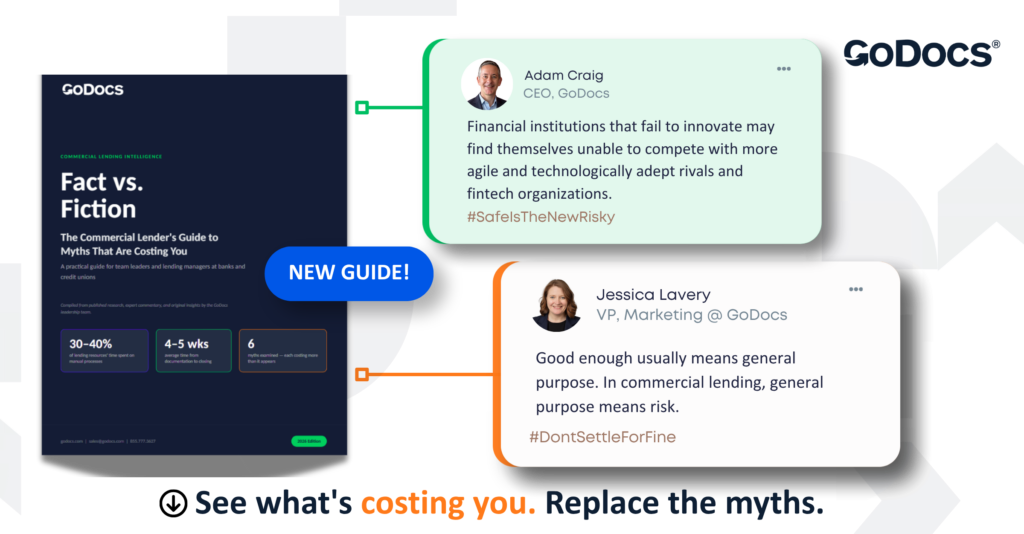
- Playing it safe is no longer a neutral position, and inaction carries real cost in 2026
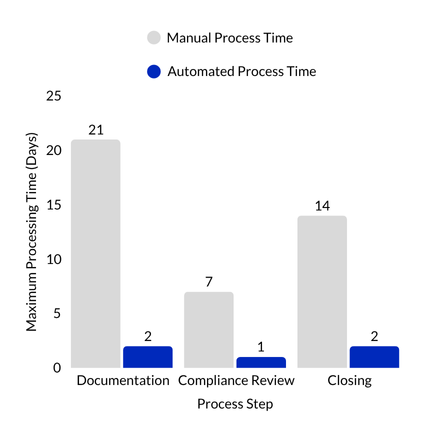
- Cycle time problems are usually systems problems, not staffing problems
- AI doesn't have to be all-or-nothing. Human-led, AI-assisted is a viable and proven middle path
- SBA lending requires its own operating system, and treating it like standard commercial creates post-close risk
- Vendor consolidation feels like simplicity but often creates single points of failure
- Support quality is a throughput issue, not a nice-to-have
Why These Commercial Lending Myths Are Hard to Shake
Beliefs about how lending should work get baked in early through training, institutional habit, and years of “this is how we’ve always done it.” The problem is that these beliefs feel responsible, even proven.
But the commercial lending environment in 2026 looks different than it did five years ago. A $900 billion wave of commercial loan maturities is creating pressure to close faster. SBA volume just hit a 16-year high. And the institutions that are operationally, technologically, and strategically ready are going to capture more than their share.
These myths feel like sound judgment, and that makes them costly.
Top 6 Commercial Lending Myths at a Glance
"Playing It Safe Is Playing It Smart"
In a stable environment, caution is a reasonable strategy. But commercial lending in 2026 is not a stable environment. Lenders who stay with legacy systems and manual processes are trading one kind of risk for another. Slower cycle times, higher operating costs, and shrinking competitive advantage are all forms of risk.
"Our Current Tech Does What We Need"
The question isn’t whether your current system works. It’s whether it’s working well enough. A KPMG study found that 30-40% of lending resources’ time is spent on manual processes that technology could handle. We call this a “systems problem dressed up as a staffing problem”. Familiarity with a tool is not the same as the tool being the right fit.
"All Vendor Support Is Basically the Same"
When something breaks mid-close, vendor support stops being a service feature and starts being part of your production system. The difference between a vendor who responds in hours and one who responds in days is a true throughput issue. It affects cycle time, borrower experience, and team morale in ways that rarely show up on a vendor comparison spreadsheet.
"AI Is Either Everything or Too Risky"
The debate around AI in lending tends to collapse into two camps: full automation or complete avoidance. We’ve found that the more useful frame is human-led, AI-assisted, where AI handles volume, speed, and pattern recognition, and humans make the calls that require judgment, relationship, and accountability.
"SBA Lending Is Just Like Any Commercial Loan"
SBA lending has its own compliance requirements, documentation standards, and post-close obligations. Lenders who treat it as a variation of standard commercial are creating risk they may not see until it’s too late. With SBA 7(a) volume at a 16-year high, maintaining full SBA compliance remains a mainstream operational challenge that deserves its own infrastructure.
"We Need One Vendor for All Lending Types"
Fewer systems and logins are rightfully appealing, but solutions that try to handle every loan type create workarounds and service quality gaps. Specialization wins because the complexity of commercial, SBA, and C&I lending is genuinely different. The best stack is often the one built for each purpose, rather than the promise to do everything.
Six Myths. Four Frameworks.
Download the guide and start asking better questions about your lending operation.

What's in the Full Guide
The guide goes deeper into data, real-world context, and practical frameworks for replacing each belief with something more useful. It also includes four tools in the appendix:
- A Curiosity Audit for your lending operation
- A Vendor Pressure-Test checklist
- An AI Governance Framework
- A "Defining Done" framework for documentation
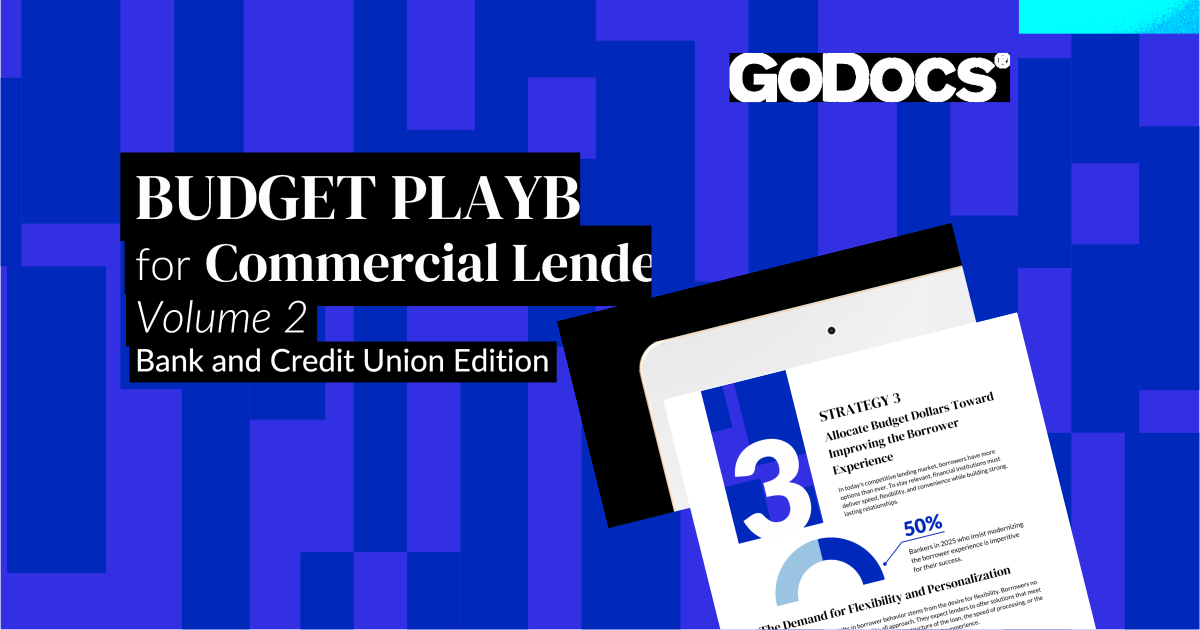
It’s free and built for commercial lending leaders at banks and credit unions.